
Industrial air pollution is best addressed with a layered strategy: identify the pollutants, reduce emissions at the source, capture contaminants before they disperse, apply the right control technology, monitor performance, and maintain equipment consistently. Wet scrubbers are especially useful for many soluble, reactive, corrosive, and odorous gases, but every facility should select controls around its actual process conditions and regulatory requirements.
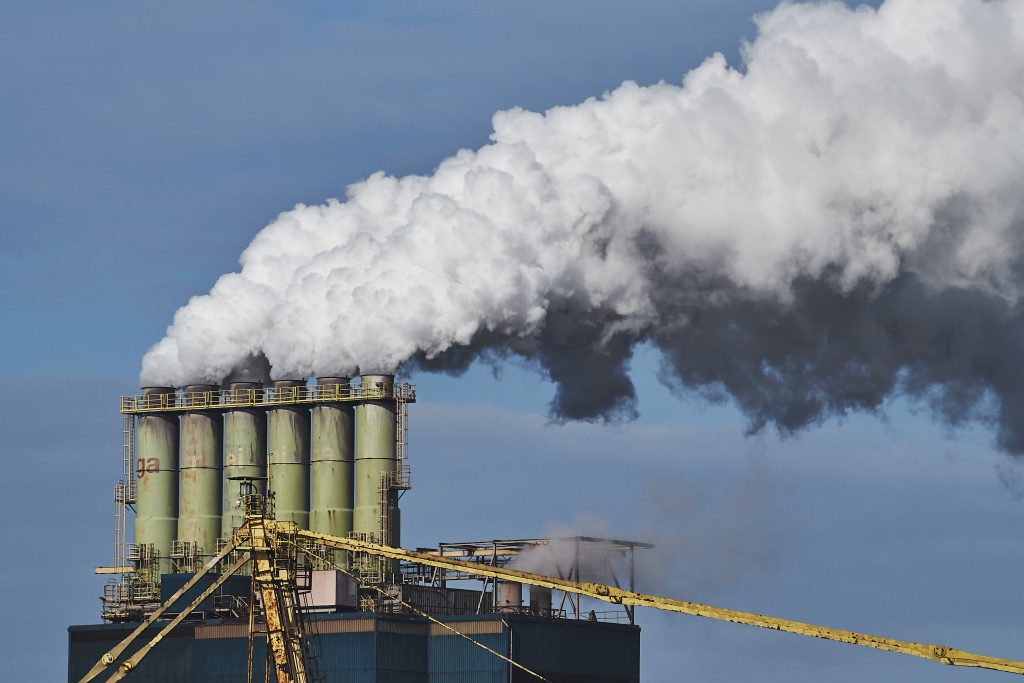
There is no single answer to how to solve air pollution from industrial facilities. Emissions vary widely by process and may include acid gases, sulfur compounds, ammonia, odors, volatile compounds, combustion byproducts, aerosols, or particulate matter. Effective control starts by understanding what the facility emits, where those emissions originate, and how operating conditions change over time.
The strongest programs combine pollution prevention with capture, treatment, monitoring, and maintenance. This layered approach reduces dependence on a single piece of equipment and gives operators more ways to prevent an abnormal condition from becoming a permit violation, worker-safety issue, or community concern.
Identify and Quantify the Major Emission Sources
Before selecting emission control equipment, the major emission sources need to be mapped. These may include process vents, tanks, reactors, dryers, combustion equipment, material-transfer points, wastewater operations, loading areas, and fugitive leaks. Each source can have different flow rates, temperatures, contaminant concentrations, moisture levels, and operating schedules.
Use available process data, emissions testing, permit information, and operating history to develop a realistic baseline. The goal is to separate routine emissions from intermittent events and understand whether one source dominates the overall load. A system designed around an inaccurate inlet condition can be oversized, undersized, or poorly matched to the actual contaminant.
Reduce Pollution at the Source Where Practical
Source reduction lowers the burden on downstream controls. Facilities can review raw materials, combustion settings, chemical use, production steps, storage practices, and waste generation to determine whether pollution can be prevented before it reaches an exhaust stream.
Examples include replacing a high-emission material with a lower-emission alternative when feasible, reducing unnecessary solvent losses, improving combustion efficiency, keeping lids and transfer systems closed, minimizing process temperatures that drive volatilization, and preventing spills. These changes should be evaluated against product quality, safety, throughput, and process requirements rather than adopted in isolation.
Capture Emissions Close to the Point of Release
Pollutants are easier to control before they dilute into a large building air volume. Hoods, enclosures, ductwork, and localized ventilation can direct contaminated air toward an appropriate control device. Good capture design also reduces the amount of extra air that must be moved and treated.
Capture systems should be evaluated together with the process. Excessive airflow can increase fan energy and control-equipment size, while inadequate capture can allow contaminants to escape into the work area. Balance is important: the system needs enough airflow to contain the source without creating unnecessary treatment load.
Use the Right Air Pollution Control Technology
Different pollutants require different control mechanisms. Particulate matter may be handled with devices such as filters, cyclones, or electrostatic collection in appropriate applications. Some volatile organic compounds may require adsorption or thermal treatment. Soluble, reactive, corrosive, or odorous gases are often strong candidates for wet scrubbing.
For many gas-phase applications, packed bed scrubber systems for air pollution control provide a high surface area for contact between contaminated gas and a scrubbing liquid. Packing, liquid distribution, gas velocity, chemistry, and pressure drop all influence mass-transfer performance.
When the contaminant reacts with a reagent, chemical scrubber systems can combine absorption with chemical neutralization. The reagent is selected around the target compound, and operating controls such as pH and liquid circulation help maintain the conditions needed for removal.
Match Scrubber Chemistry to the Contaminant
A wet scrubber is not simply a tower filled with water. The scrubbing liquid must be compatible with the contaminant and the desired reaction. Water may be effective for highly soluble compounds, while caustic, acidic, oxidizing, or other chemical solutions may be used in specific applications.
MACH Engineering designs acid scrubber systems for hazardous acidic gas emissions and also supports contaminant-specific systems for gases such as HCl, SO2, chlorine, ammonia, and hydrogen sulfide. Each design should account for gas concentration, temperature, flow, chemistry, materials, and required outlet conditions.
Control Odors and Wastewater-Related Air Emissions
Industrial air pollution does not come only from stacks or combustion processes. Wastewater tanks, equalization basins, treatment vessels, sludge handling, and process drains can release hydrogen sulfide, ammonia, or other odorous compounds. These emissions can create worker and community concerns even when concentrations fluctuate throughout the day.
A properly designed odor control system captures contaminated air and treats it before discharge. Depending on the chemistry, one or multiple scrubbing stages may be used to reach the required performance.
Monitor Performance Instead of Assuming the System Is Working
Air pollution control needs measurable operating indicators. Facilities may track pressure drop, recirculation flow, reagent concentration, pH, fan performance, gas temperature, liquid level, differential pressure, emission measurements, or other parameters depending on the system.
Trend data is especially useful because it shows gradual changes that may not trigger an immediate alarm. Rising pressure drop can indicate fouling or restriction. Changing pH may show that chemical feed is not keeping up with the load. A declining recirculation rate can reduce wetting and mass transfer. Using operating data makes troubleshooting faster and more objective.
Maintain Pollution Control Equipment Proactively
Even well-designed equipment can lose efficiency if maintenance is neglected. Pumps, fans, spray nozzles, liquid distributors, packing, mist eliminators, instruments, valves, and chemical feed systems should be inspected according to the service conditions and manufacturer recommendations.
Maintenance planning should focus on the failure modes most likely for the application. Corrosive service may require close inspection of materials and liners. Solids-bearing or scaling systems may need more frequent cleaning. Processes with variable loads may require tighter control-loop checks. Preventive maintenance is generally easier to manage than a sudden loss of control during production.
Plan for Startups, Shutdowns, Spikes, and Emergencies
Steady-state design data does not always describe the most difficult operating condition. Startups, batch releases, cleaning cycles, tank vents, process upsets, or emergency releases can create short-duration peaks that challenge a control system. Facilities should identify these scenarios during design and determine how they will be managed.
For temporary needs, pilot work, maintenance outages, or a gap before a permanent system is ready, packed tower scrubber rental can provide flexible short-term pollution control. Rental equipment still needs to be matched to the contaminant, flow, chemistry, and required removal target rather than treated as a universal solution.
Facilities with credible accidental-release scenarios may also require dedicated emergency scrubber systems designed around factors such as leak rate, spill duration, ventilation, heat generation, outlet concentration, and corrosion resistance.
Review the Entire Process Before Expanding Control Equipment
When emissions increase, the answer is not always a larger scrubber. The underlying cause may be a process change, reduced capture efficiency, blocked internals, poor liquid distribution, worn packing, incorrect reagent control, or a new contaminant profile. Reviewing the full process can reveal lower-cost improvements before major equipment changes are made.
For complex mass-transfer systems, process simulation and hydraulic review can help evaluate tower diameter, packing height, stages, pressure drop, and expected removal. These engineering tools are most valuable when they are tied directly to the equipment and process being designed or upgraded.
Build a Facility-Specific Air Pollution Control Strategy
The practical way to solve industrial air pollution is to combine prevention, capture, treatment, monitoring, and maintenance around real operating data. Facilities should know what they emit, how emissions vary, which controls address each pollutant, and which measurements show whether the equipment is performing as intended.
MACH Engineering specializes in the design and manufacture of air and water pollution control equipment. With more than 25 years of industry experience, we provide custom solutions, technical support, tower packing, internals, wet scrubbers, and rental scrubber options for industrial applications. If your facility is evaluating a new control system or troubleshooting an existing one, request a quote so we can review the process conditions, emission-control goals, and long-term operating requirements.

FAQs
What is the first step in reducing industrial air pollution?
Start by identifying the emission sources and measuring or estimating the contaminants, flow rates, temperatures, concentrations, and operating patterns. Accurate inlet conditions are essential for selecting and sizing controls.
When are wet scrubbers useful for industrial air pollution?
Wet scrubbers are useful for many soluble, reactive, corrosive, and odorous gas streams. They use a liquid to absorb contaminants and may use chemical reagents to neutralize specific pollutants. Their effectiveness depends on factors such as contaminant properties, gas flow, liquid chemistry, contact efficiency, and overall scrubber design.
Why does scrubber maintenance affect emissions?
Scrubber performance depends on liquid flow, packing condition, chemical feed, pH, pressure drop, pumps, fans, distributors, and mist elimination. Fouling, scaling, depleted reagent, or equipment failure can reduce removal efficiency.
Can a facility rent a scrubber instead of buying one?
Yes. Rental packed tower scrubbers can support temporary projects, outages, testing, or short-term control needs. The rental system should still be evaluated against the specific contaminant, gas flow, chemistry, and performance requirements.
