
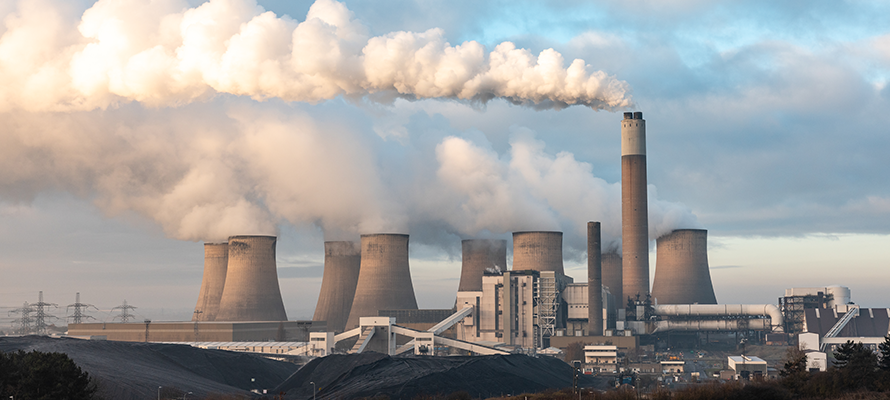
Coal scrubbers act as environmental filters in power plants. These devices use chemical reactions to neutralize sulfur dioxide (SO₂), turning it into manageable by-products. Environmental regulations are continuing to tighten, making coal scrubbers a vital tool for regulatory compliance.
Sulfur dioxide remains one of the most prevalent, harmful pollutants released during coal combustion. Without effective control technology, these emissions contribute to acid rain, respiratory illness and ecosystem degradation.
Scrubbers address this challenge by removing sulfur dioxide from exhaust gases before they exit the smokestack. The technology has become essential for protecting both human health and the environment.
What Are Coal Scrubbers?
Coal power plant scrubbers, also known as flue gas desulfurization (FGD) systems, are large-scale pollution control devices. You can install scrubbers in a plant’s exhaust pathways to mitigate the effects of sulfur dioxide. These systems filter and neutralize flue gases before they can be released into the atmosphere.
Scrubbers work by spraying an alkaline mixture — typically water combined with limestone — into hot exhaust streams. This process triggers a chemical reaction that converts pollutants into by-products. These solid or liquid by-products are suitable for either disposal or reuse.
Air pollution control evolved from 19th-century public nuisance laws into environmental frameworks. Coal scrubbers became prevalent in the 1970s and 1980s, driven largely by the United States Clean Air Act. This legislation established enforceable standards for air quality and empowered the EPA to regulate industrial emissions. Today, industrial scrubbers are one of the most successful applications of emission control technology.
Understanding the Effects of Sulfur Dioxide Emissions
Sulfur dioxide is a colorless, reactive gas with a strong odor. It forms when sulfur impurities combine with oxygen during combustion. Nearly all coal contains traces of sulfur, which turns into gas at the high temperatures required for electricity generation. Without capture systems, sulfur dioxide travels through exhaust pathways and into the atmosphere.
This gas poses severe risks to human health and the environment. Exposure affects the respiratory and cardiovascular systems, causing bronchitis and exacerbating asthma. Sulfur dioxide is also a major precursor to acid rain, along with nitrogen oxides. Acid rain can damage forests, acidify lakes and corrode infrastructure.
To protect public health and welfare, the EPA has established stringent air quality standards for sulfur dioxide. The primary standard limits concentrations to 75 parts per billion. The secondary standard sets an annual average of 10 parts per billion to protect vegetation, ecosystems and visibility. These regulations often drive sulfur dioxide controls at coal power plants, including scrubbers, fuel switching or other compliance strategies.
How Do Scrubbers Work?
Many coal-plant FGD systems use wet scrubbing technology to remove sulfur dioxide from flue gas. The process relies on alkaline reagents — such as limestone or lime — that react with sulfur dioxide to form more stable by-products, such as calcium sulfite or gypsum. This approach offers high removal efficiency and flexibility for varying gas compositions.
The wet scrubbing process follows these steps:
- Flue gas enters the absorber tower: Exhaust gases are directed into a vertical column where they encounter the scrubbing solution.
- Slurry spray contacts the gas: Specialized nozzles spray a mixture of limestone and water over the rising gas stream. This creates maximum contact between the liquid and gas phases.
- Chemical reaction neutralizes SO₂: The calcium carbonate in limestone reacts with sulfur dioxide to form calcium sulfite.
- Oxidation produces gypsum: Calcium sulfite is oxidized to calcium sulfate (commonly known as gypsum). This mineral can be recovered and sold, or disposed of safely.
- Cleaned gas exits the system: The treated gas passes through mist eliminators to remove water droplets. Now largely free of sulfur dioxide, the gas is released through the smokestack.
Key Components Explained
These subsystems work together to remove sulfur dioxide:
- Absorber towers are the main vessels where chemical reactions occur. This tower is designed to maximize gas-liquid contact time and ensure neutralization.
- Spray nozzles atomize limestone slurry into fine droplets, increasing surface area and reaction efficiency.
- Mist eliminators remove residual water droplets from the treated gas before it exits the system, reducing liquid-droplet carryover, downstream fouling and stack fallout, though visible water-vapor plumes can still occur.
- Reagent preparation systems feature slurry tanks and pumps that prepare and circulate the limestone mixture. This helps maintain proper reagent concentration throughout the process.
- Dewatering systems handle the gypsum by-product, separating solid material for disposal or commercial use.
Different scrubber configurations meet specific operational requirements. For example, packed bed scrubbers use structured or random packing media to enhance gas-liquid contact.
Performance and Efficiency
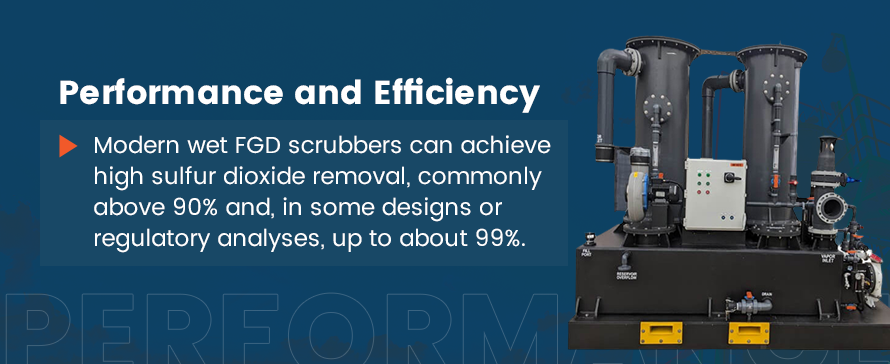
Modern wet FGD scrubbers can achieve high sulfur dioxide removal, commonly above 90% and, in some designs or regulatory analyses, up to about 99%.
Both wet and dry scrubbers can be used to mitigate the effects of sulfur dioxide. Wet scrubbers use a liquid scrubbing solution to neutralize sulfur dioxide from exhaust gases. As the standard for high-sulfur coal applications, they are best suited for large-scale operations needing maximum emission reduction.
Semi-dry scrubbers atomize lime slurry into the flue gas, while dry sorbent injection systems pneumatically inject powdered alkaline sorbent into the furnace, economizer or ductwork. They are more compact, consume less energy and do not generate wastewater. These systems work best for medium- to small-sized industrial boilers or facilities with limited space.
Continuous monitoring and testing ensure scrubber systems meet EPA regulations. To maintain permit compliance, plant operators must track removal efficiency, reagent consumption and by-product generation.
What Are the Benefits and Drawbacks of Coal Scrubbers?
The benefits of sulfur dioxide scrubbers include:
- Emissions reduction: Modern scrubber systems capture up to 99% of sulfur dioxide in some cases, reducing the formation of acid rain and protecting air quality.
- Health improvements: Scrubber adoption has contributed to measurable reductions in respiratory illness and cardiovascular disease. This is especially beneficial in communities near coal-fired facilities.
- Regulatory compliance: These systems help power plants meet EPA standards, avoid penalties and maintain operating permits.
At the same time, scrubbers present notable challenges:
- Energy consumption: Large pumps, fans and mist eliminators require substantial electricity. This auxiliary power usage can reduce a plant’s net energy output and thermal efficiency.
- By-product management: Wet scrubbers generate substantial amounts of calcium sulfite and calcium sulfate sludge, calling for carefully managed landfills or containment ponds to prevent groundwater contamination.
- Space and infrastructure needs: Coal scrubbers demand massive physical footprints to house absorber towers, reagent preparation facilities and extensive ductwork.
Despite these costs, gypsum offers high commercial value. The global synthetic gypsum market was valued at $2.18 billion in 2025. The market is projected to grow, providing revenue opportunities that help offset operational expenses.
Why Trust MACH Engineering?
MACH Engineering brings more than 25 years of industry experience to pollution control applications. Our company customizes solutions to your plant’s specific requirements. From initial design through installation, MACH offers comprehensive service for emission control projects of all scales.
Our Process Engineering Department combines hands-on field experience with advanced simulation technologies. We develop practical, flexible designs that adapt to evolving industry standards.
MACH’s commitment to quality engineering and competitive pricing sets us apart. As a leading mass-transfer provider, we are your trusted partner in industrial air pollution control.
